AGP Executive Report
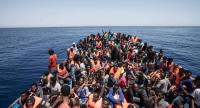
Last update: 2 days agoOver the last 12 hours, coverage in this 7-day set is dominated less by Eritrea-specific cultural reporting and more by broader media-and-society stories that repeatedly place Eritrea at or near the bottom of global press-freedom rankings. A World Press Freedom Index update on Hong Kong (rank 140, “very serious” category) is used to illustrate how political, economic, and social indicators are sliding together, while a separate World Press Freedom Day framing emphasizes that “over half” of countries now fall into “difficult” or “very serious” conditions and that journalism is increasingly “criminalised.” In parallel, a UK-focused report on the cost-of-living crisis describes record levels of modern slavery in Britain and notes Eritrea as the second-largest source nationality among potential victims referred in 2025—an example of how Eritrea appears in international reporting beyond Eritrean borders.
Within the same last-12-hours window, there is also a clear thread of regional security and information pressure that indirectly intersects with Eritrea’s Red Sea context: multiple reports describe the UAE’s air-defence interceptions of missiles and drones launched from Iran, including updated totals of intercepted projectiles and casualty figures. While these items do not directly involve Eritrea, they reinforce the broader Red Sea/Horn-of-Africa security environment that other articles in the week connect to Eritrea’s strategic relevance.
Looking slightly further back (12 to 72 hours ago), the most concrete Eritrea-related development is diplomatic and sanctions-focused: Reuters-based reporting says the U.S. intends to lift sanctions on Eritrea imposed in 2021, citing an internal U.S. document and linking the rationale to Eritrea–Ethiopia disagreements over sea access. This is echoed by earlier commentary that warns easing sanctions without accountability and human-rights benchmarks could entrench impunity. Together, these pieces suggest a potential policy shift toward engagement, but the evidence also stresses uncertainty about timing and the absence of clear accountability measures.
Finally, the week’s background coverage on press freedom provides the continuity for why Eritrea keeps resurfacing in international narratives: multiple World Press Freedom Day/Index items describe a global retreat in media freedom, with UN Secretary-General Antonio Guterres warning that “85%” of crimes against journalists go uninvestigated and that impunity is “unacceptable.” Eritrea is repeatedly referenced as among the worst-ranked (including being cited as one of the lowest in the index), and an Africa-focused press-freedom warning identifies Eritrea as a leading jailer of journalists. In contrast, the Eritrea Arts Review–relevant cultural items in the provided material are sparse in the most recent hours, with more general cultural/event coverage appearing elsewhere in the week rather than a distinct Eritrean arts development.
Note: AI summary from news headlines; neutral sources weighted more to help reduce bias in the result.